
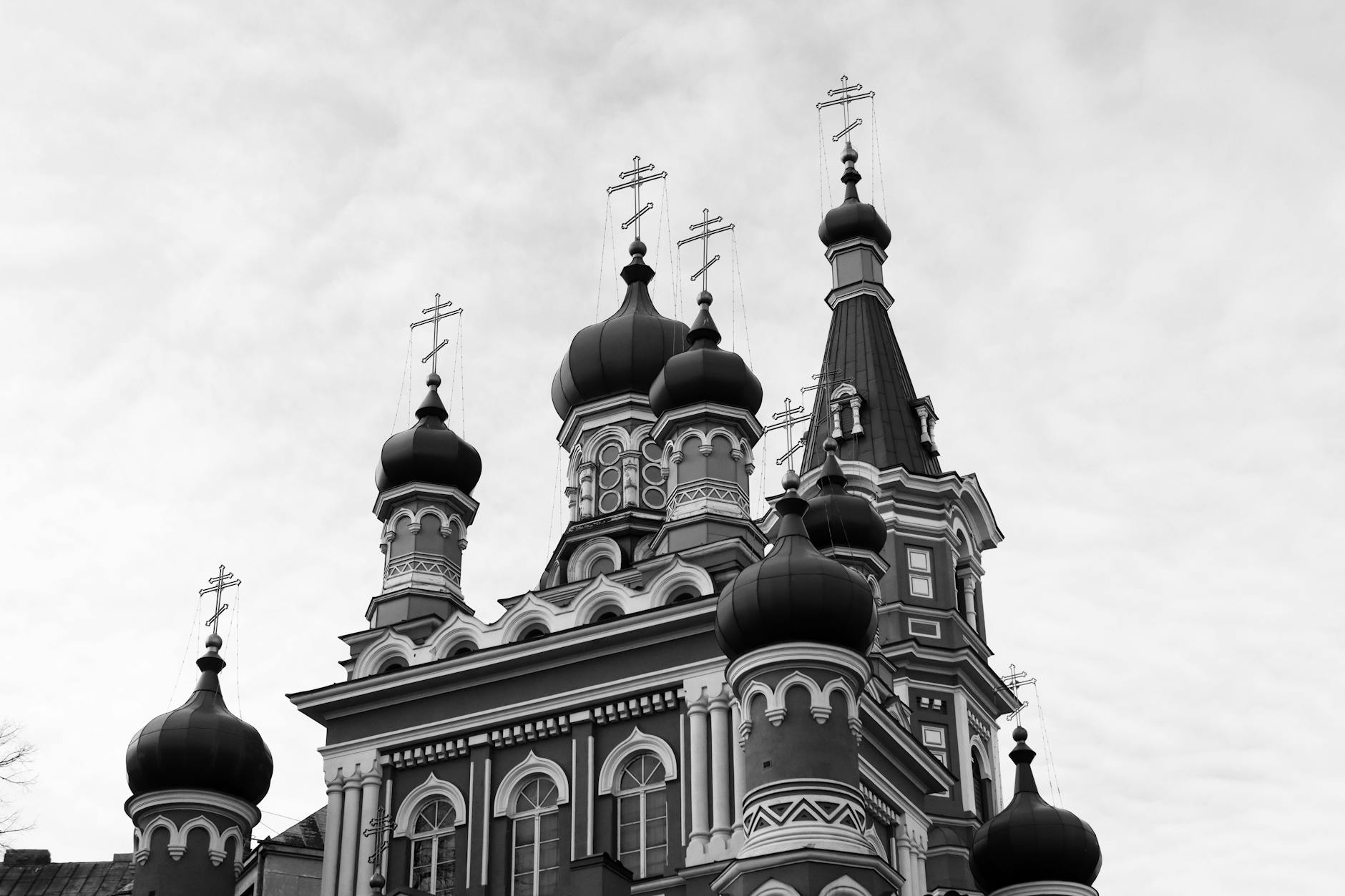
The Church as an Organization and Actor. Informality and Corruption in Serbia and the role of the Serbian Orthodox Church
Corruption indices such as the Corruption Perception Index (CPI) from Transparency International are a popular tool for determining the perception of corruption. Serbia ranks 105th out of a total of 180 countries surveyed in the international ranking. Quantitative research approaches are increasingly using a standardized concept of corruption as the basis for their analysis in order to establish comparability between countries. The practical recommendations and guidelines derived from this often miss the social realities in the fight against corruption. In contrast, Serbian Orthodoxy has its own anti-corruption concepts, anchored in sacred texts and liturgical tradition, whose content and relationship to other, competing norms will be examined.
Serbia can look back on an eventful history. The 20th century began with the country’s independence from the Ottoman Empire. After the Second World War, the Balkan region, formerly dominated by the Danube Monarchy and the Ottoman Empire, organized itself into the socialist multi-ethnic state of Yugoslavia. The more recent past is characterized by various developments such as the Yugoslav wars of disintegration (1991-1995 and 1998-1999), the end of the Milošević era, the democratic awakening and the post-Yugoslav transformation processes. The Thessaloniki Agenda of 2003 opened up a European perspective for the successor states of Yugoslavia. Serbia has been conducting accession negotiations with the EU since 2014. At the same time, a resurgence of autocratic tendencies, persistently difficult social and economic structures and the unresolved Kosovo conflict have been identified as major obstacles.
In this complex context, the Serbian Orthodox Church (SOC) acts not only as a moral authority, but also as a political actor and an economically active organization. However, despite its high relevance for Serbian society, past and present, it is still insufficiently researched. The rediscovery of Svetosavlje in the interwar period of the 20th century as a socio-political ideology based on the interpretation of the national saint Sava Nemanjić (1174 – 1236) will be used as a basis for the reassessment of the SOC’s reactions to Serbia’s political and socio-economic challenges. In order to generate a broad research approach, the research project will include the writings of leading church members such as Bishop Nikolaj Velimirović (1880 – 1956), Justin Popović (1894 – 1979) and Bishop Atanasije Jevtić (1938 – 2021), publications from neighboring disciplines such as theology, philosophy, history and political science as well as the official documents of the SOC. Discussions and interviews will be held with representatives of the clergy and civil society. The SOC’s horizon of experience ranges from its imperial past to its marginalization in socialist Yugoslavia. The DFG-funded project “The Church as an Organization and Actor: Informality and Corruption in Serbia and the Role of the Serbian Orthodox Church (1991-2023)” will address this research gap in a context-sensitive manner.
Three research questions will be addressed:
1. What are the organizational and financial structures of the SOC?
2. How does the SOC position and behave towards informality and corruption in the Serbian economy and society and what role does it play in the corresponding public discourses?
3. Which specific informality and corruption events and scandals of the past three decades has the SOC been involved in and what role has it played?
The research interest revolves around the relationship between the SOC and the Serbian state and the resulting power relationship, the church’s position on informality and corruption phenomena and the reaction to such phenomena. The aim of the project is to investigate the Church’s position how the SOC dealt with informality and corruption during the patriarchates of Pavle (1990-2009), Irinej (2010-2020) and Porfirije (from 2022). The research results should contribute to a more sophisticated and deeper understanding of the SOC as well as the Serbian political system and Serbian society.
– Vladimir Stošić (STE 1088/6-2)


 Regensburg Corruption Cluster